
The political world is focused right now on the Missouri congressional maps. But this is really a dispute about federalism, and that dispute has been brewing for more than two hundred years. This article is about the dance between the federal and state government about admitting slaves.

When Missouri petitioned for statehood, it allowed slavery. A congressman from New York moved in 1818 to bar introduction of enslaved people into Missouri and to free those born there after admission once they turned 25.1 This amendment passed into the admissions bill, but the Senate would not agree to admit Missouri with this language in the bill. This dispute held up admission for over a year.
Congress passed an Act of Admission on March 6, 1820, authorizing Missouri to draft a Constitution to apply for statehood. Missouri’s Constitutional Convention then met in St. Louis. They adopted and signed Missouri’s first constitution on July 19, 1820. This Constitution became effective on August 10, 1821, when Missouri was admitted into the United States. Among other issues, this Constitution required the Missouri General Assembly to pass laws “to prevent free negroes and mulattoes from coming to and settling in” Missouri.
Congress refused to ratify Missouri with this language in its Constitution. The compromise was a Resolution providing for the admission of the state of Missouri into the Union, on a certain condition, approved March 2, 1821. The federal Resolution rejected the above phrase and stated that “no law shall be passed in conformity thereto, by which any citizen of either of the states in this Union, shall be excluded from the enjoyment of any of the privileges and immunities to which such citizen is entitled under the constitution of the United States.” The Resolution required the Missouri legislature to state its assent and submit such bill in order, after which Missouri would be accepted into the Union.
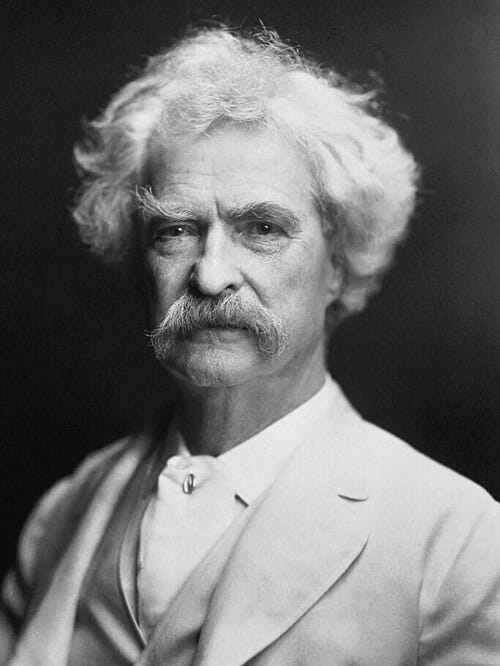
Missouri, in response, drafted in its legislature A Solemn Public Act, approved by the Missouri Legislature on June 26, 2021. In the style of Mark Twain, using the most formal language possible, the Missouri Legislature, “for as much as the good people of this state have by the most solemn and public act in their power,” “consented to be incorporated into the federal Union, and governed by the constitution of the United States.” They stated that “the [authorized] laws of the United States … shall be the supreme law of the land, and the judges in every state shall be bound thereby.”
Missouri further stated that it does not believe Congress has the power to put that restriction upon Missouri constitution, but (using the most formal, legalistic language possible, again in the style of Mark Twain), it agreed not to pass any law “by which any citizen of either of the United States shall be excluded from the enjoyment of any of the privileges and immunities to which such citizens are entitled under the constitution of the United States.”
President James Monroe accepted this compromise and authorized Missouri to become a state on August 10, 1821.
Much has happened in the intervening years, and the most recent fight between the authority of the state and the federal government is happening this week. As I type this on September 9, 2026, Missouri is embroiled in a legal debate as to what map it will use to determine congressional districts: the one that passed the legislature in 2022 (what a fight that was!) or the redistricting map that passed the legislature in 2025.
Last week, after the primary, the Missouri Supreme Court struck down the 2025 map (that was used in the primary vote). Yesterday, the US Supreme Court refused to take up the issue, and (in a separate lawsuit), the federal district court in the Eastern District of Missouri issued a stay to require the state to use the 2025 map in November. The Republican government announced that it would use the 2025 map - and yesterday was the constitutional deadline for determining the November ballots. Opponents of the 2025 map have asked the Missouri Supreme Court for sanctions against the Secretary of State (Denny Hoskins), and the MO Supreme Court has ordered the Secretary to show cause why he should not be held in contempt of that court for obeying the stay ordered by the federal court. Meanwhile, opponents of the 2025 map have also appealed the stay to the Eighth Circuit.

Adventure Awaits.
Sarah Unsicker served in the Missouri House of Representatives from 2017 to 2024.
Lawrence Wilson, ed., The National Register: A weekly paper, containing a series of the important public documents, and the proceedings of Congres…Volume VII (Washington City: 1819), 125.